


Contents
In the simplest terms, borehole drilling refers to drilling a deep, narrow hole into the ground. It is the best and most-used method for accessing groundwater, installing geothermal systems, exploring mineral resources and hydrocarbon reservoirs, and in general investigating the subsurface conditions. We explain the process and methods of drilling boreholes in this article.
What is borehole drilling?
Borehole drilling is the process of creating narrow, cylindrical holes in the ground to access water, oil, or gas, as well as to conduct geological studies. Common methods include rotary drilling, which uses a rotary bit to drill through the rock and soil.
Why do we drill boreholes?
Borehole drilling allows for penetration relatively deep into the Earth’s crust to reach targets that provide crucial information for future mining, oil and gas, or infrastructure projects without having to remove entire rock layers with mass excavation. For this reason, it is by far the most widely used method for resource or geotechnical exploration.
Also read: What is borehole surveying, and why do we do it?
Advanced equipment is key
Though it can seem rather simple – because almost everyone can understand how drilling a hole works – for it to be efficient, it requires highly specialized machines, tools, and procedures. After all, some boreholes, particularly in the oil and gas industry, routinely reach thousands of meters in length, meaning that various downhole parameters must be carefully managed using the latest in engineering advancements.
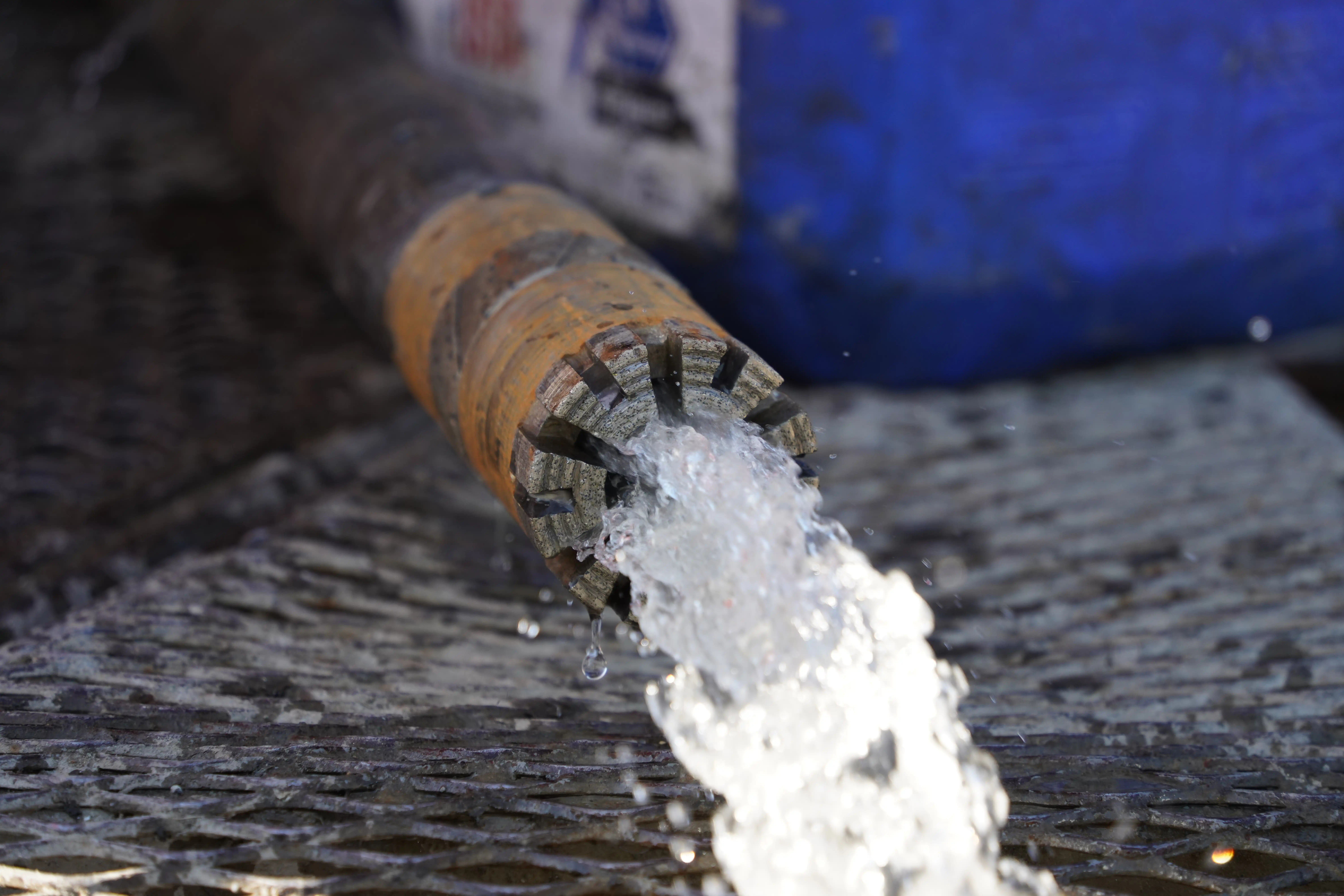
The borehole drilling process: How does it work?
1. Site assessment
The process starts with assessing and preparing the surface where the pilot hole will be drilled and the drilling operation will be conducted. This first step of preparation includes the following processes:
- Site assessment: Evaluating soil type, topography, and the potential environmental impact.
- Clearing: Removing any vegetation or obstacles, as well as leveling the ground, which is crucial for securing a stable foundation for the drilling rig.
- Setting up the drilling platform: Setting up the drilling rig and ensuring all safety measures are in place.
2. Drilling the pilot hole
The next step is to drill the pilot hole, which sets the trajectory for the entire drilling operation. In other words, this is a crucial step for planning the correct speed, depth, and angle of the drilling equipment.
3. Casing installation
The borehole is cased and lined, which stabilizes it and prevents collapse before the main drilling operation in the next step. Casing the borehole involves selecting the correct material, which is based on the geological conditions of the site. PVC and steel are commonly used materials. Once it is selected, casing is instered into the drilled borehole and sealed.
4. Main drilling operation
The drilling operation starts by installing a large drill bit that is typically more robust and can drill deeper than the pilot hole. Ensuring a consistent drilling speed and taking controlled measures for the varied geological layers are key factors to success.
5. Sampling
Once the drilling is completed, samples for the drilled boreholes are collected and examined. These samples provide insights into the conditions of the various layers of soil, rock, and other materials. This requires specialized sampling tools and techniques. The samples are then labeled, various analyses are conducted at the lab, before a detailed report on the findings is finally presented. Typically, this provides valuable information on the subsurface conditions, including the potential for resource extraction.
6. Installing well components
The next step is to transform the drilled borehole into a functional well that allows for pumping the groundwater or any other resources being collected. An important part of this stage is to select the necessary well components and to install screens and filters. Once that is done, you install the actual pumping system which extracts the resources from the well. The type of pump system depends on factors like the static water level. Finally, the well must be connected to the surface infrastructure.
7. Cleanup
The final step of the borehole drilling process is cleanup and site restoration. The goal is always to restore the environment to its original state, as it was before the clearing in step one. It involves the following actions:
- Removal of drilling equipment and waste.
- Land reclamation: Filling unused boreholes, levelling the land, and replanting vegetation.
- Environmental monitoring: Creating a plan for assessing the environmental impact of the drilling operation, including analysis of soil and water samples for contaminants.
- Reporting: Documenting the cleanup efforts and preparing a report detailing the methods of the aforementioned steps.
Common borehole drilling methods
Rotary drilling
Rotary drilling uses a drilling bit, attached to a drilling string, which is rotated with weight applied, in order to advance through the rock layers. The inevitable cuttings produced through this method of drilling are removed by a circulation system, either with drilling mud or with air.
Common use
It is the most common method (if not the only one) used in the exploration and production of deep hydrocarbon resources, where the stability of the borehole is crucial for the prevention of blowouts.
But it is also very common in its diamond drilling form in mineral exploration, where core recovery is important for the purpose of planning future mining activities.
Down-the-hole (DTH) hammer drilling
DTH hammer drilling uses a pneumatic hammer at the bottom of the drill string to deliver rapid blows while the bit is rotating.
Common use
This method is common in hard rock drilling, in mining, and for water wells.
Cable-tool (percussion) drilling
Cable-tool drilling is an old method (and mostly replaced by rotary drilling) where a cutting bit is repeatedly struck to advance the drill string by percussive force alone.
Common use
It is still being used in some places for very shallow water wells.
Sonic drilling
Sonic drilling is a form of borehole drilling that uses high-frequency vibration to advance the drill bit. It is exclusively used where minimal disturbance is desired, especially for environmental sampling.
Auger drilling
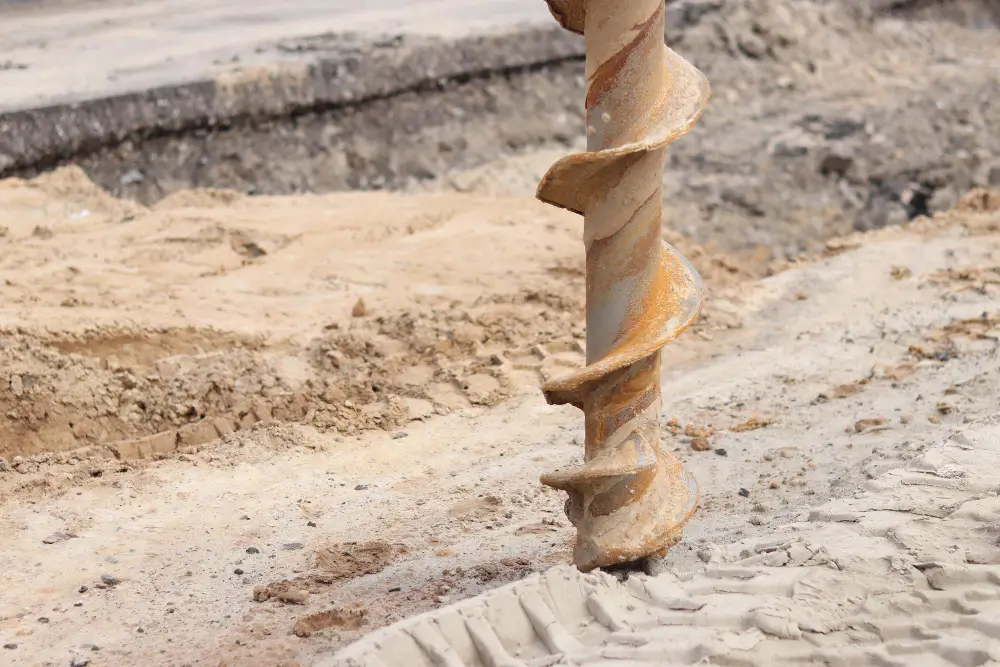
Similar to the hand-held drilling machines that one might use to drill small holes for screws, albeit at a much larger scale, auger drilling rigs use a screw-shaped tool to excavate rock and ground material.
Common use
This method is most efficient in shallow geotechnical and geological investigation.
Typical uses for boreholes
Groundwater extraction
Boreholes provide quick and easy access to underground aquifers that can be used for drinking water, irrigation, or industrial processes, especially in regions where surface water is scarce.
Geotechnical and environmental investigations
Engineers use boreholes to extract information regarding soil stability, to collect core samples of the ground rock, or to install various monitoring systems.
Resource exploration
Since most mineral, geothermal, and hydrocarbon resources are no longer close to the surface, boreholes are an absolute necessity for assessing the quantity of the buried resource and the economic viability of its extraction.
Energy and infrastructure projects
Blasting operations in mining and construction, as well as anchoring and grouting in civil engineering, are dependent on borehole drilling for efficiency.
Also read: Understanding the basics of mineral exploration
Borehole drilling throughout the years
The starting point for borehole drilling
One could theorize that hand-dug wells should also be considered a form of borehole drilling for the purpose of accessing water resources, which means that this method has been around for as long as humans realized they can reach groundwater by digging a well.
However, the borehole drilling concept that is similar to what we know today, was first documented by the Ancient Chinese of the Han Dynasty (202 BC – 220 AD), who used deep borehole drilling to reach mineral resources, and it is believed they could reach to about 500 meters in depth.
They used to rotate a drilling bit attached to a drill string using draught animals, then adding weight to push the bit into the ground; it is essentially what borehole drilling is today, only with less efficiency and technology.
The emergence of iron use
The use of iron tools made the process easier and carried the technique throughout the Middle Ages, then further advancements such as mechanical rigs and steam power brought further penetrative capabilities to borehole drilling.
Cable-tool (or percussion drilling) rigs then allowed deeper and deeper holes to be drilled and made hard rock drilling easier. They were operated by lifting and dropping a heavy cutting or hammering bit, forcing it through the rock.
The start of industrial drilling
Then in 1915, the rotary table was invented, and it truly revolutionized the entire drilling industry. It consisted of a large metal plate with a square hole in the middle. A large square pipe would be fitted through the opening in the plate, called a Kelly, and the table itself would then be rotated by a powerful engine. This was a much more efficient power-delivery method to the drill string, which brought boreholes to lengths never thought possible before.
The emergence of modern technologies
The next, and most recent, massive jump in borehole drilling technology was the introduction of the top drive in 1981. A competing technology of the rotary table, the top drive is essentially an engine mounted directly on top of the drill string, reducing power loss through a rotating table, and making it easier to add and control the weight on the drill string. Nowadays, the vast majority of modern drilling rigs have switched to the top drive, and in the diamond drilling industry (particularly for mining exploration) virtually all drilling rigs use this technology.
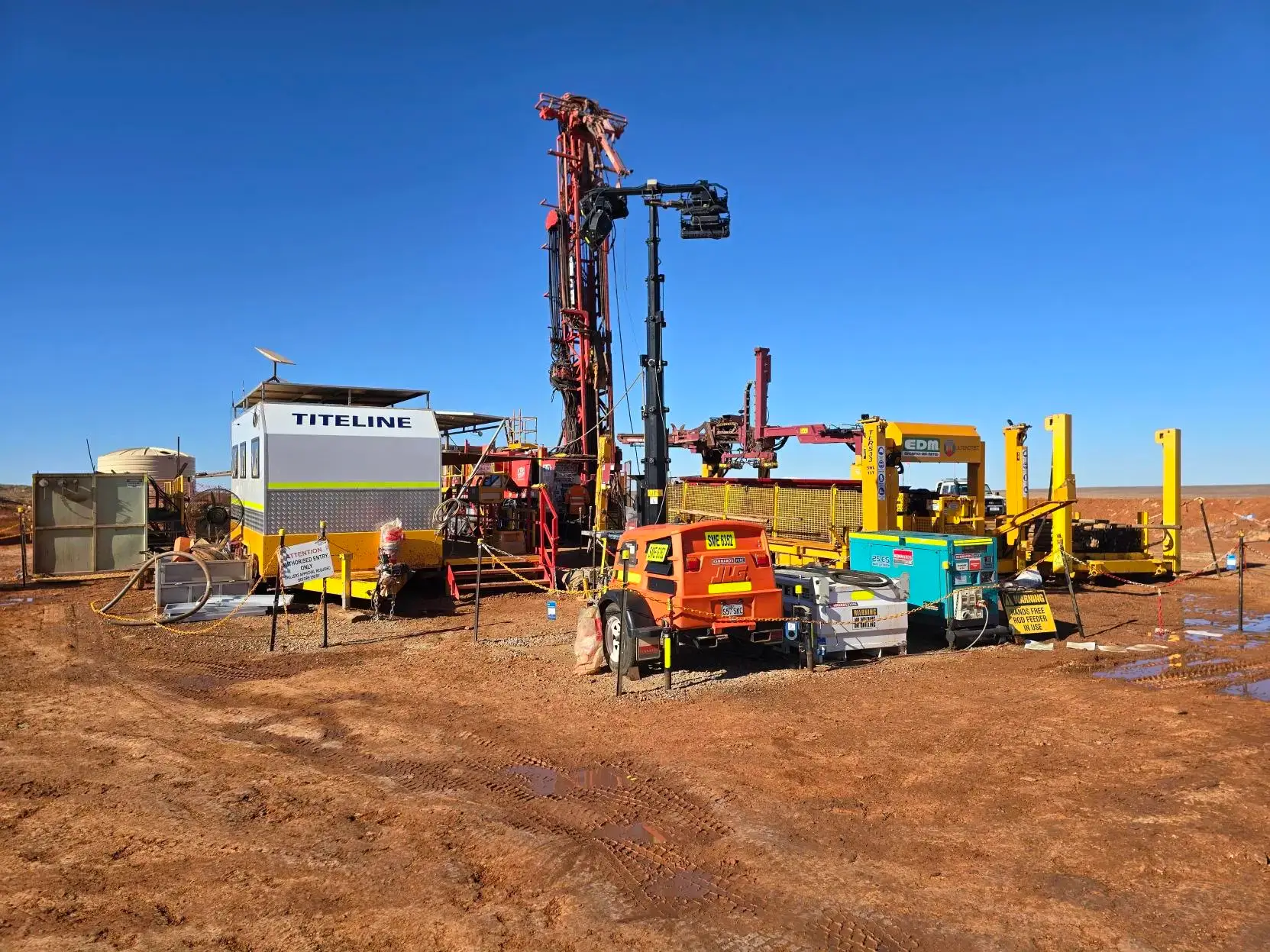
Challenges and technical considerations
Geological uncertainty
Varied stratigraphy can vastly affect the performance of the tools chosen for the job. Generally, one can’t afford to switch back and forth between borehole drilling methods based on the changes in the rock characteristics, so care needs to be taken in choosing the best method and equipment for the expected borehole length and downhole conditions.
Equipment wear
Especially drilling in hard rock can quickly wear out bits and other components of the drill strings. However, even the hole geometry, as well as various conditions such as pressure and temperature, can exert more stress on the drill string, requiring frequent changes of drill pipes.
Borehole stability
In most scenarios, a stable borehole is preferred, as one doesn’t want to drill a borehole that will immediately collapse. But in certain industries, a stable borehole could be the difference between a successful operation and an environmental disaster (or a tragic one that can result in loss of life). In hydrocarbon exploration and extraction, for example, boreholes need to be kept stable with the use of the appropriate drilling fluid, at a specific density and with specific characteristics. A small deviation there could cause an explosive blowout.
Water and pressure management
If the pressure inside the borehole isn’t properly managed (again, usually through the use of appropriate drilling fluids), water and other fluids could cause an influx. An influx could rapidly turn into a blowout if not addressed quickly and carefully.
Into the future: What can we expect?
No matter where the future takes us as a species, it is extremely difficult to imagine borehole drilling as not being a major part of it. Whether we’re talking about ensuring water security, finding and more efficiently using critical minerals, further hydrocarbon exploration and extraction, and even environmental monitoring, borehole drilling will be critical for all of that and much more.
We can expect to see automated drilling rigs become common (as we are already seeing remotely operated drilling rigs), the further use of intelligent drilling analytics, better methods for borehole steering and monitoring of parameters through heavy use of sensors; but the concept of pushing a drilling bit through ground rock to create a hole that takes us deep into the earth will exist in one form or another for as long as we will.
Advanced directional drilling technology in mining
Aziwell is a leading provider of directional drilling solutions and offers service and software products for directional drilling. At the heart of this is our advanced technology, which reduces the environmental footprint through fewer drill pads, operational time, and CO₂ emissions. Our directional drill is precise, does not require special rods or rigs, and has no depth limitations.

