


Contents
Directional drilling enables the drilling of curved boreholes, which make it possible to hit a specific target with high precision, but also to intercept multiple targets by branching out from the same mother hole. In mining, directional drilling is thus proven to be a cost-effective and often less environmentally harmful method of drilling. This guide provides an overview of the basics of this drilling practice in different industries, while also discussing the benefits of directional drilling in mining.
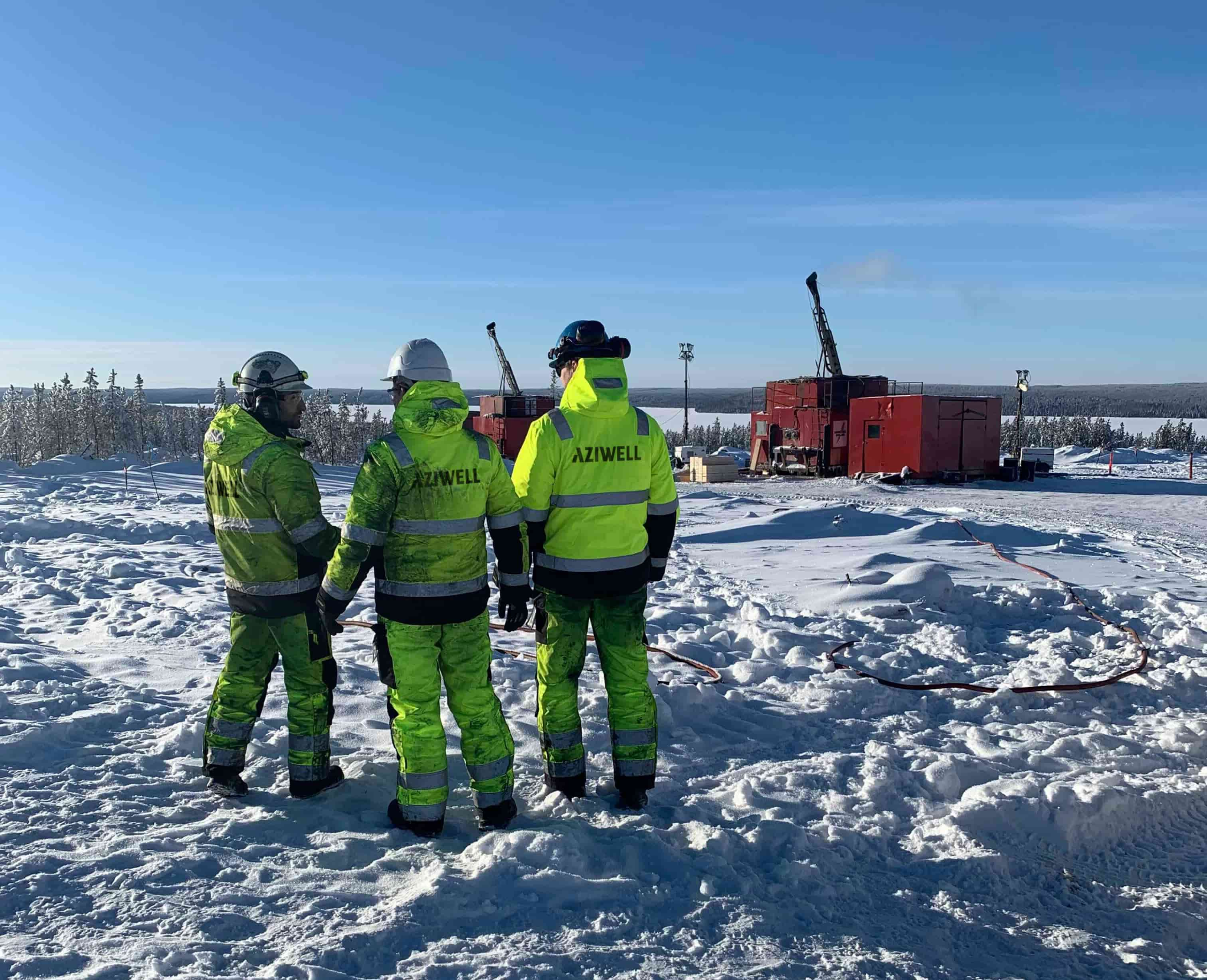
What is directional drilling?
Directional drilling, also referred to as borehole steering or slant drilling, is a technique that drills bores or wells along a curved path. In practice, it is a type of angled or curved drilling that aims to reach a specific target. Therefore, directional drilling provides access to underground areas that are not accessible through conventional drilling with minimal disturbance to the surface.
Though reservoirs are accessible vertically, directional drilling offers an alternative when there are certain objects in the way to reach the target. By drilling at an angle, the operator can access the target and is able to explore more parts of it since reservoirs tend to form horizontally, not vertically.
How does directional drilling work?
Conventional methods rely on a vertical trajectory dictated by gravity and the drill bit's natural drift. In contrast, directional drilling utilizes specialized downhole equipment to actively steer the path.
The process relies on several key mechanics:
- Continuous supervision: By employing advanced survey instruments alongside steering units or motors, operators maintain constant supervision of the bit's depth and orientation.
- Intentional deviation: This real-time data allows for intentional wellbore deviation to adhere to a meticulous, predetermined path.
- Trajectory control: The drill bit is guided along a non-vertical path while rotating. This relies on tight coordination between surface equipment (providing rotation power) and downhole equipment (executing the steering).
Read more: For a deeper dive into technical specifics, explore our guide breaking down various directional drilling methods.
Benefits of directional drilling
It limits the environmental impact of drilling
Compared to conventional drilling, there is a reduced soil disturbance and ecological impact on sensitive habitats surrounding the reservoir. By limiting the construction footprint, it ensures that wetlands and forests are not unnecessarily impacted. Mineral exploration can also be done with less disruptions to residents in the area.
It is cost effective
Directional drilling allows companies to explore smaller areas (one location), but still explore multiple underground targets. Reducing the number of drilling locations can have an impact on the costs. Unlike vertical drilling, which requires several rigs, directional drilling can access a considerably large area from a single rig.
Case study: Learn how we saved costs and water resources during our directional drilling gold exploration project in Mexico.
It is time-efficient
When working from one rig, the time it takes to drill is minimized since one reservoir or multiple zones can be targeted by a single directional wellbore. Additionally, a single drilling pad can host several directional wells while targeting different reservoirs.
A brief history: When did directional drilling emerge?
Directional drilling techniques have been in use since the 1920s, offering a groundbreaking solution to challenges in accessing subsurface materials. Historically, conventional drilling for oil, gas, and mining went down in a straight line.
With emerging technology, controlled trajectories became possible. These technologies made their way from the oil and gas sector into the mining sector and have undergone immense improvements in recent years. Today, directional drilling is more precise and customizable than ever before.

Industries utilizing directional drilling
Directional drilling offers a solution when a direct vertical approach is not feasible. Operators can ensure the drill goes down, curves, goes sideways, and drills horizontally for long distances. It is a critical technique across several major sectors:
The Mining Sector
Mining companies use directional drilling to reduce the total number of drilled meters in multi-target programs. It is highly efficient for exploring huge areas and is extensively used in geotechnical investigations which require an extreme degree of accuracy. By reducing the number of drilled meters and time spent on site, it increases the likelihood of a financially lucrative project.
Read more: The ore mining process
Oil and Gas Industry
Directional drilling helps oil-extraction companies access underground reservoirs when traditional vertical drilling is not possible. It provides a practical solution when operators face limitations, such as:
- Structures blocking the way: When surface obstacles prevent a direct vertical path to the target.
- Sensitive rock formations: When there is environmentally sensitive geology that operators must avoid intruding upon.
Infrastructure Projects
For installing pipelines, cables, and utility networks, directional drilling is a valuable construction method. It allows engineers to seamlessly cross under roads, rivers, and urban obstacles with precision.
Why use directional drilling in mining projects?
In modern mineral exploration, directional core drilling has become a game-changer. Here is why mining operators prefer this method:
- Precise targeting: New technologies enable operators to target boreholes more efficiently. By reducing the number of drill holes needed, companies save both time and financial resources.
- Increased exposure to the ore body: Minerals are rarely settled in a single, convenient deposit. They are often found in separate, irregular pockets. Directional drilling increases the exposed section length through the ore body by drilling through it at an optimal angle, pocket by pocket.
Mining sector
Mining companies use directional drilling when they want to reduce the total number of drilled meters for a multi-target drilling program. As a technique, directional drilling is highly efficient and precise when one is tasked with drilling huge areas. It is also extensively used in geotechnical drilling, which requires an even greater degree of accuracy. In the drilling, one follows specific paths, for which directional drilling bores enable.
Read more: The ore mining process
Oil and gas industry
Directional drilling is a technique used by oil-extraction companies that want to access oil in underground reservoirs. Most traditional, vertical oil wells are positioned above the targeted reservoir, but there are many oil and gas projects where it is not possible to drill vertically into the ground. There might be structures blocking the way or environmentally sensitive rock formations that one does not want to intrude upon. This puts limitations on how one can and should drill for the natural resources that are of interest.
Infrastructure
For installing infrastructure like pipelines and cables, directional drilling is a valuable construction method. If there are roads, rivers, or any obstacles underground, directional drilling makes it possible to escape, cross, and avoid them with precision and efficiency.
Why to use directional drilling in mining projects
If there is a tight budget
If the budget is tight or one simply wants to ensure high levels of profitability in the project, directional drilling offers a solution. By drilling directionally, the number of drilled metres will be reduced. This can save costs on exploration budgets by reducing time spent on actual drilling. Thus, it increases the likelihood of carrying out a financially lucrative project.
For precise targeting
Directional drilling is highly precise, and thanks to the emergence of new technology, it has become possible to target boreholes more efficiently than before. In mining, the use of downhole or mud motors have been made obsolete thanks to technologies like the Azidrill, which enables one to reduce the number of drill holes. In effect, this reduces the total drilling distance and the time and financial resources required to carry out the operation.
To get an increased exposure to the ore body
It is quite common to work around irregular ore bodies when mining. More times than not, minerals are not settled in a single deposit, but accessible in separate pockets that are not joined together. For example, ore bodies that are located close to environmentally sensitive areas will impact the accessibility of the target. To work around this, the drill is positioned from an angle and steered towards one pocket at a time. Directional drilling increases the exposed section length through the body by drilling through it at an angle.
Case study: Directional drilling in gold exploration
In the Guerrero state in Mexico, Aziwell offered directional drilling services to save costs and water consumption in an effort to combat the lack of hydrological resources in the area. In partnership with Torex Gold, we planned and executed for directional drilling in several steps, resulting in an accurate and targeted exploratory project.
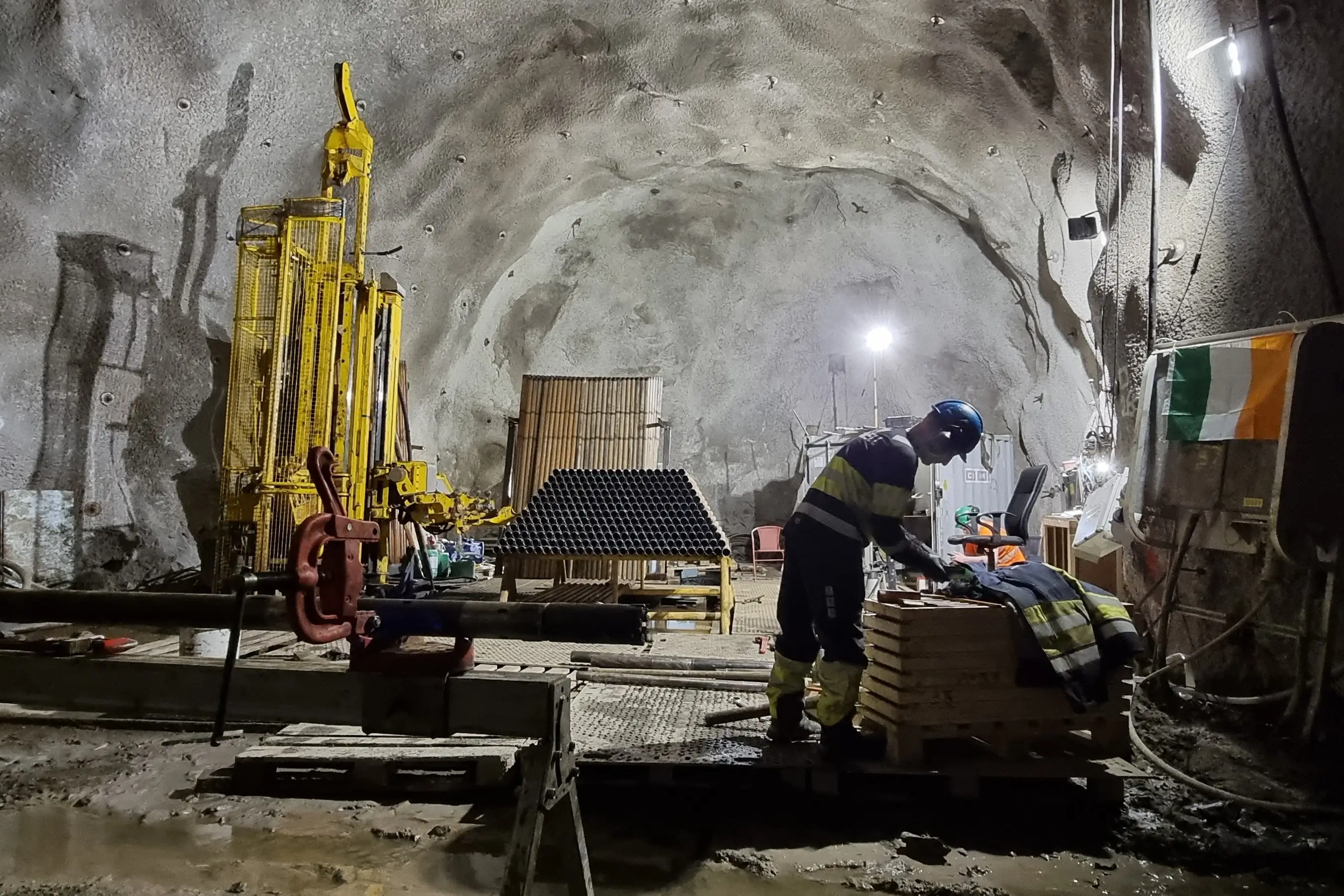
The emergence of new drilling technology
Historically, directional and horizontal drilling were significantly slower than vertical drilling. The process was often prolonged by the need to stop regularly for time-consuming surveys. For decades, both the oil and gas and mining industries relied heavily on traditional downhole motors to steer the drill.
While the oil and gas sector eventually improved efficiency and reliability by adopting steerable mud motors with bent housings, the mining industry required a different approach to optimize mineral exploration.
Directional core drilling replaces downhole motors in mining
Today, emerging technologies are making traditional downhole motors obsolete in the mining sector. Directional core drilling has become the new standard, offering a superior alternative that integrates seamlessly with modern mining equipment.
Advanced solutions, such as the AziDrill technology, completely replace the dependence on downhole motors. This innovation makes the steering process far more feasible and efficient, allowing for highly accurate mineral exploration without the traditional delays.
Benefit from our advanced directional drilling technology
Aziwell is a leading provider of directional drilling solutions and offers service and software products for directional drilling. At the heart of this is our advanced borehole steering technology, which reduces environmental footprint through fewer drill pads, operational time and CO₂ emissions. Our directional drill, AZIDRILL, is precise, does not require special rods or rigs, and has no depth limitations.

