


Contents
Directional core drilling is a type of directional drilling in which the core is being recovered. Directional drilling is a drilling technique that steers the wellbore in a controlled non-vertical path. This article outlines the 5-step process of directional core drilling, showcasing the most important factors to a successful drilling project.
What is directional core drilling?
Directional core drilling is a type of directional drilling in which the core is being recovered. Although directional drilling with mud motors and wedges have been employed for a very long time, the ability to recover core while continuously drilling curved sections of the borehole is a rather recent development.
Before getting started with directional core drilling, it’s important to understand what directional drilling in general is.
Understanding how directional drilling works
Overall, directional drilling enables companies to branch out and hit multiple targets from the same mother hole (borehole), but with multiple boreholes that are known as the kickoff point(s) (KOP). This enables access to underground areas with minimal disturbance to the surface. It can be used in mining, oil and gas, and infrastructure projects.
With emerging technology, the angles and turns made possible by directional drilling have been made even more precise and customizable. These directional drilling techniques have been in use since the 1920s, though the directional drilling techniques being practiced today have evolved significantly.
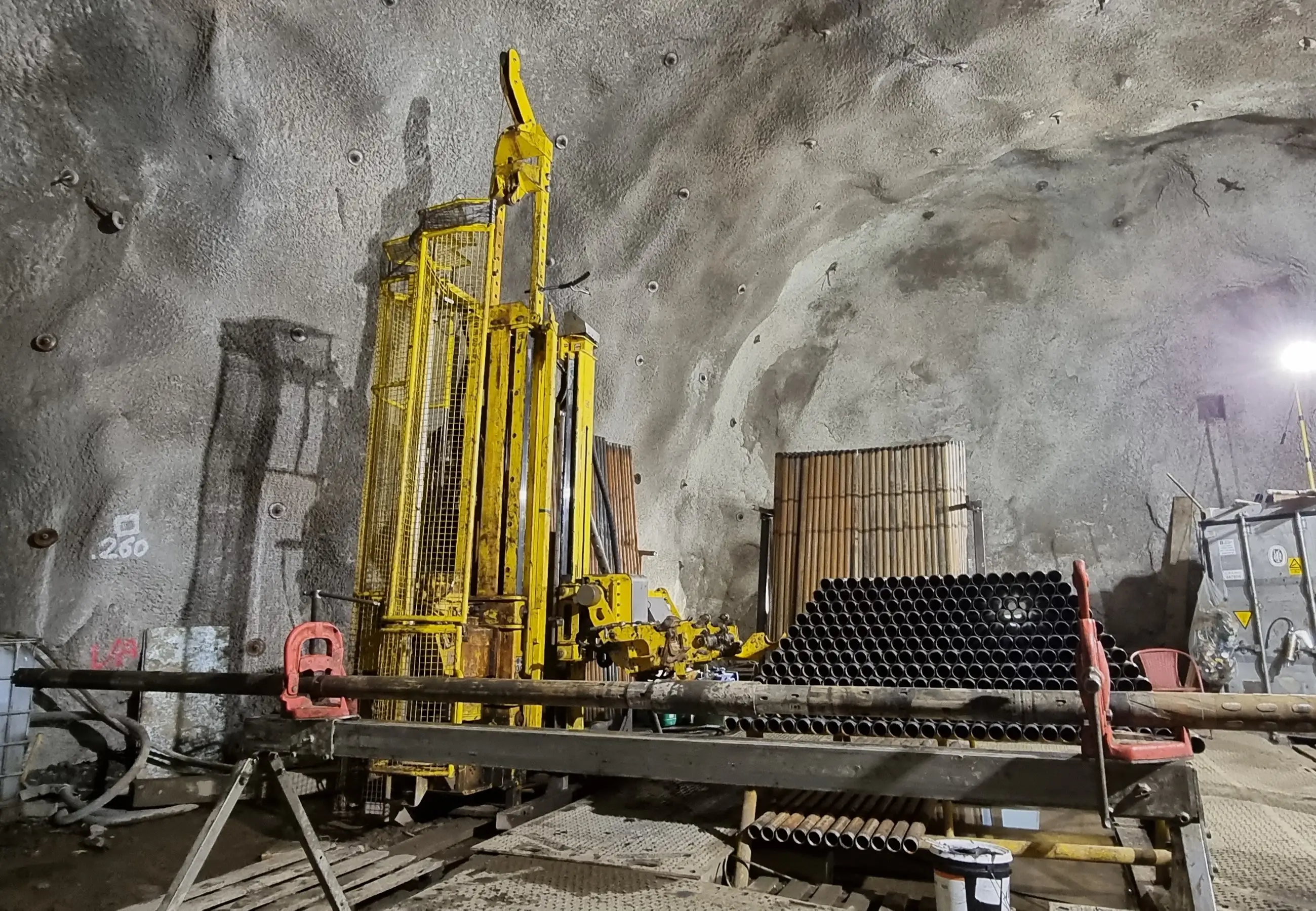
Directional core drilling in practice
When drilling directionally, the drill bit is guided along a non-vertical path, while the bit itself is rotating. The key to today’s advanced directional core drilling technology is the trajectory control. Trajectory control relies on coordination between surface and downhole equipment. Surface equipment provides power to rotate the entire drill string, while specialized downhole equipment executes the steering. Indeed very few systems with such capabilities are on the market today, Aziwell’s Azidrill being one of them.
The directional core drilling process: Start to finish
- Preparation: Establish a borehole plan.
- Drilling: Mother hole and kick-off, measurements, and adjustments.
- Inspection and control
- Reaching target: Regular surveys for extra control.
- Wrapping up project
What we need to know before any work starts
For field operators to be able to do their jobs efficiently, they need a borehole plan. That is, they need to know either where the target is located or which borehole parameters (such as inclination and azimuth) need to be reached. Furthermore, the plan tells them at which depth they will use the directional core drilling tool (also called a directional core barrel and will be referred as a DCB in this article), and in which direction they will orient it.
Another key information that the plan can provide is the needed dogleg severity (from now on referred to as DLS) to hit the target. The DLS is a measure of curvature of a drilled section, usually expressed in degrees per 30m (or 100ft). There are other ways to measure the curvature, such as a build and a turn rate, but this author (and Aziwell in general) prefer to use DLS.
Who’s in charge of the borehole plan?
This plan can either be prepared by the project manager or by an exploration geologist, or anyone that is directly responsible for the drilling project, but if you want a recommendation for exceptionally good software that will help plan boreholes, we suggest you give Aziwell’s Navigator a try.
Other considerations
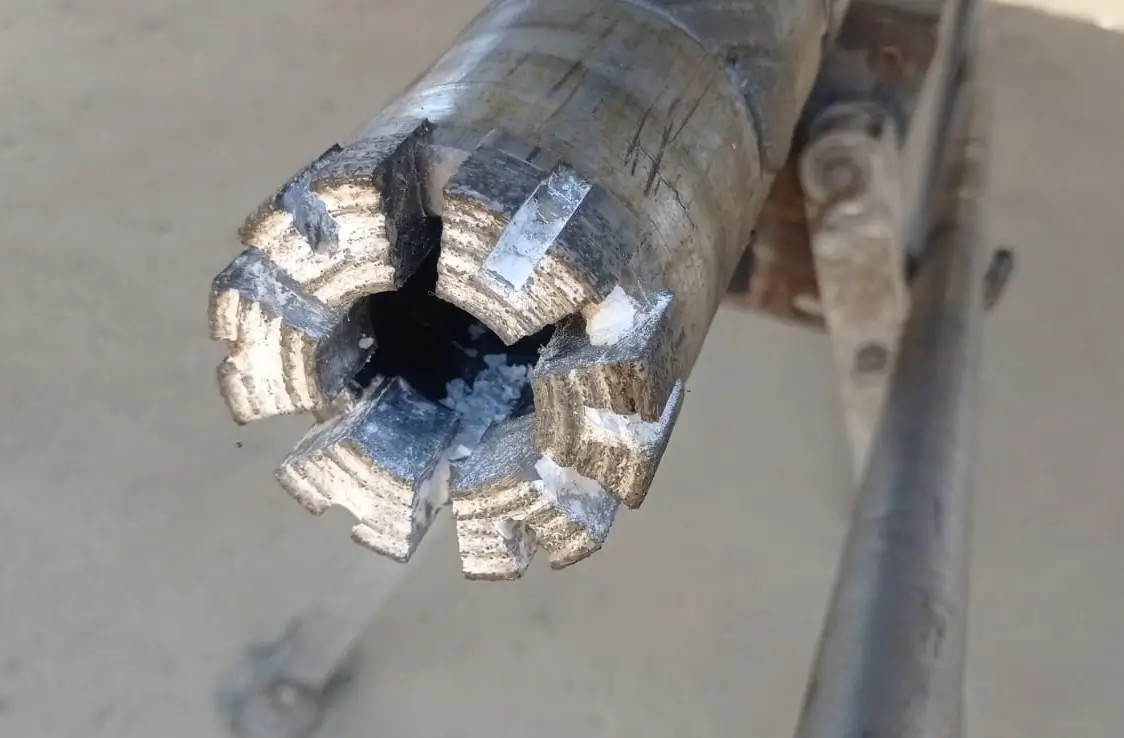
Other than the planning, it is highly useful to know what kind of rock to expect, as different rock types, with different hardness and fracture gradients can present highly varied challenges while drilling. Not to mention that the choice of drill bit is determined primarily by the type of rock expected.
The drilling itself
To our knowledge at the time of writing, directional core drilling tools are used exclusively in hard rock drilling. They are designed to replace a standard or conventional core drilling barrel in sections where the borehole needs to be deviated. This deviation is done by drilling a controlled curve which will end up pointing the borehole in the direction of the target.
We start with the Motherhole
The directional part of the drilling can very well start from the surface in some project, but it is often started from a conventional section which is called a “Motherhole”. Each subsequent deviation branch from said motherhole is commonly referred to as a “Kick-off”.
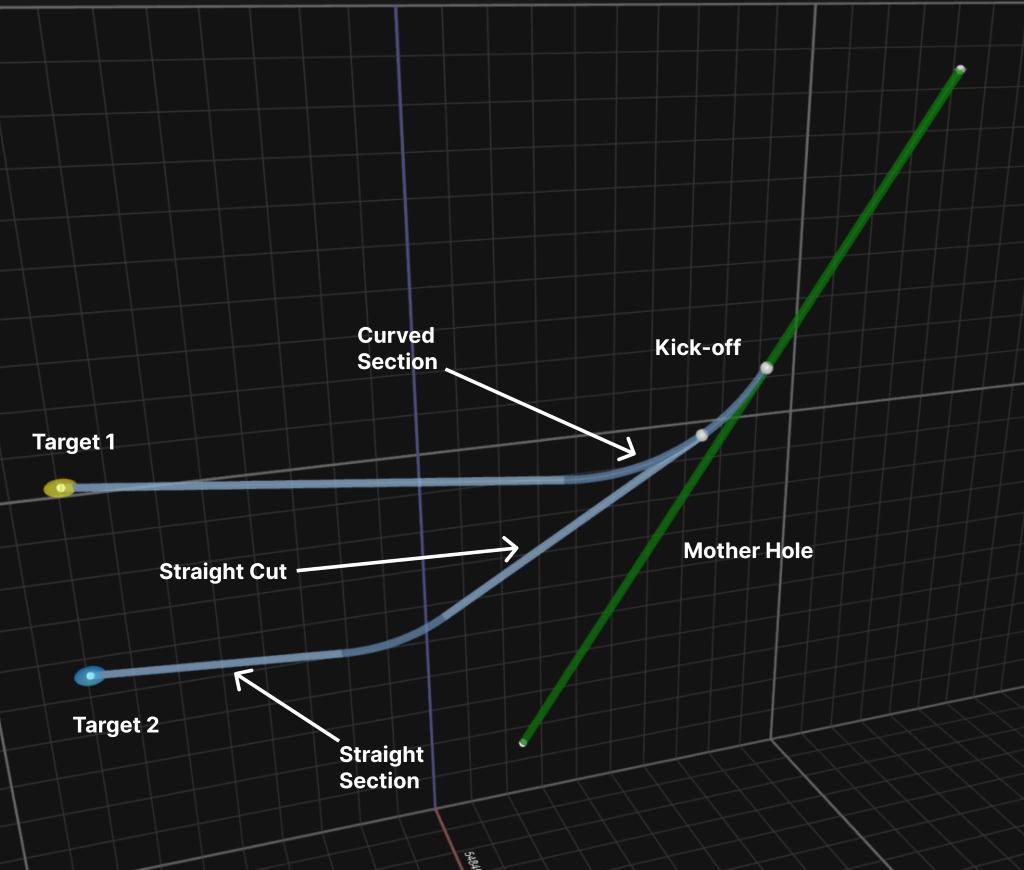
Once the conventional borehole has reached the desired depth for a kick-off (as indicated by the borehole plan), the standard core barrel will be pulled out of the hole and the directional core barrel (DCB) will take its place.
Central measurements
When the DCB reaches the bottom of the drilled hole, the operators will take measurements to make sure the DCB is oriented in the correct direction (if not, they will have to perform an orientation), after which the curved section will be drilled.
During the drilling of the curved section, the operators will have to continuously monitor the drilling parameters and have constant dialogue with the driller. Normally, while a DCB is being used, the operators are responsible for the correct usage of the tool.
Inspection and adjustments
Just as with a conventional coring barrel, the core tube is being recovered via wireline when full (or when a core block occurs), giving the operators a chance to inspect the rock and decide if any adjustments need to be made before continuing.
How do we know if we’re going the right way?
By performing regular surveys of the borehole. In this context, surveying means introducing in the borehole (either through the drill rods or directly inside an empty hole) a surveying tool, usually magnetic or gyroscopic, that will tell the change of inclination and azimuth along the path of the borehole.
Not only does the survey tell if the hole is headed in the right direction, but it also tells the DLS along the path. That information is crucial because it can enable an operator to calculate if the target can even be reached with the current DLS or if an adjustment needs to be made.
Furthermore, a DCB can usually bend a lot more than most drilling rods can withstand, so it is important to know if the DLS has reached high enough levels to warrant a re-drilling of a section at safer parameters.
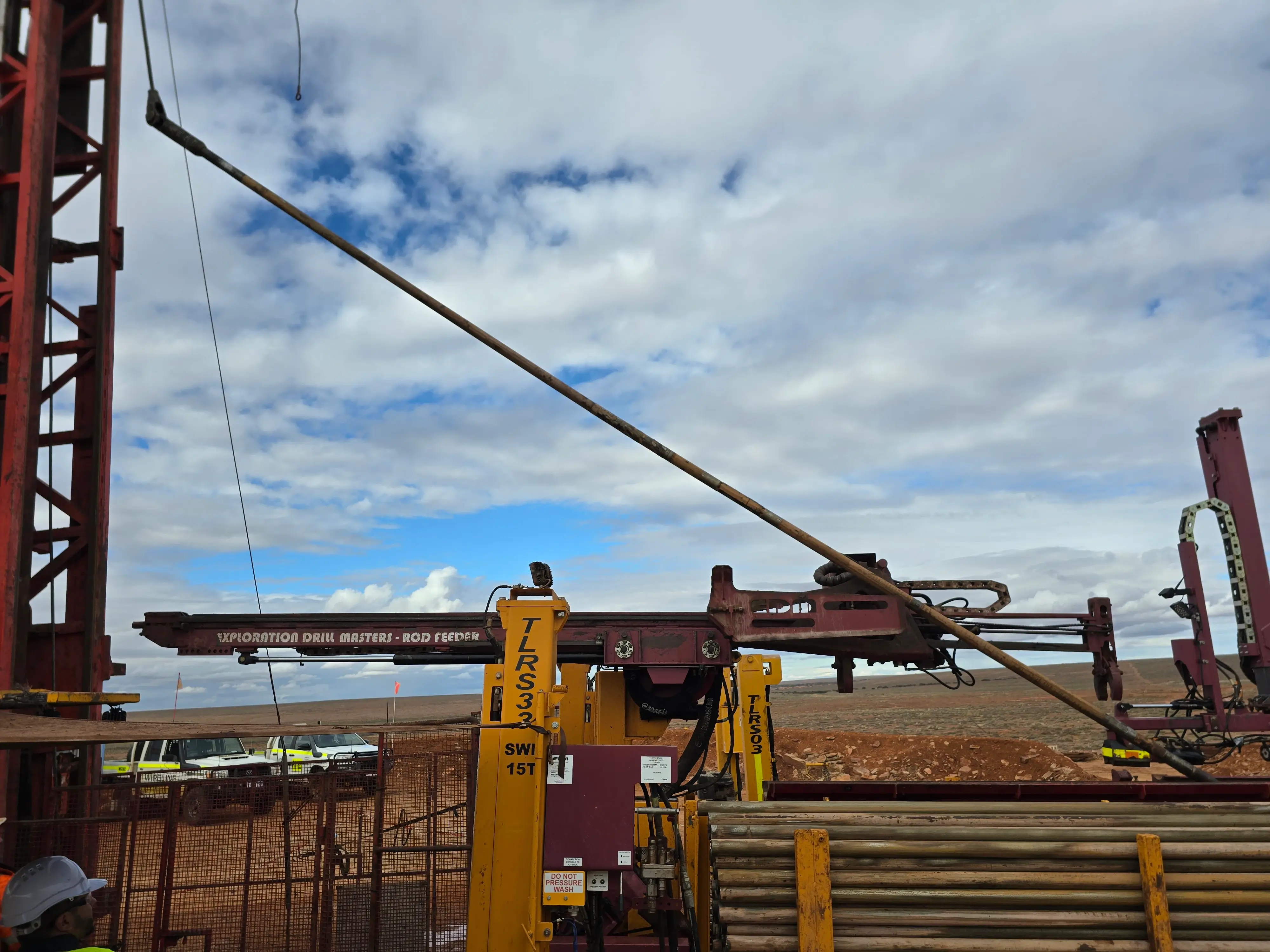
After the target is reached
If we are talking about an infrastructure drilling project, the target of the curved section might be the final target for the borehole, but in mineral exploration drilling, the target (or the end point, to use a better term) of the curved section is not the actual target of the borehole. This occurs when directional drilling is needed to point the borehole towards the target, then standard can be resumed once the borehole has reached the desired inclination and azimuth.
However, it can often happen that the natural deviation of the rock formations will push the standard core barrel off-target after the DCB has already been used. In such cases, it is usually up to the ones responsible for the drilling project to decide if the DCB will be again employed to ensure maximum accuracy.
Summary
Directional core drilling is an advanced technique that allows operators to steer a borehole along a controlled, non-vertical path while simultaneously recovering rock core samples. By utilizing specialized downhole equipment and precise trajectory control, this process enables companies to hit multiple targets from a single "mother hole," significantly reducing the environmental footprint and operational costs compared to traditional methods.
We offer advanced directional core drilling technology
Aziwell is a leading provider of directional drilling solutions and offers service and software products for directional drilling. At the heart of this is our advanced technology, which reduces the environmental footprint through fewer drill pads, operational time, and CO₂ emissions. Our directional drill is precise, does not require special rods or rigs, and has no depth limitations.

