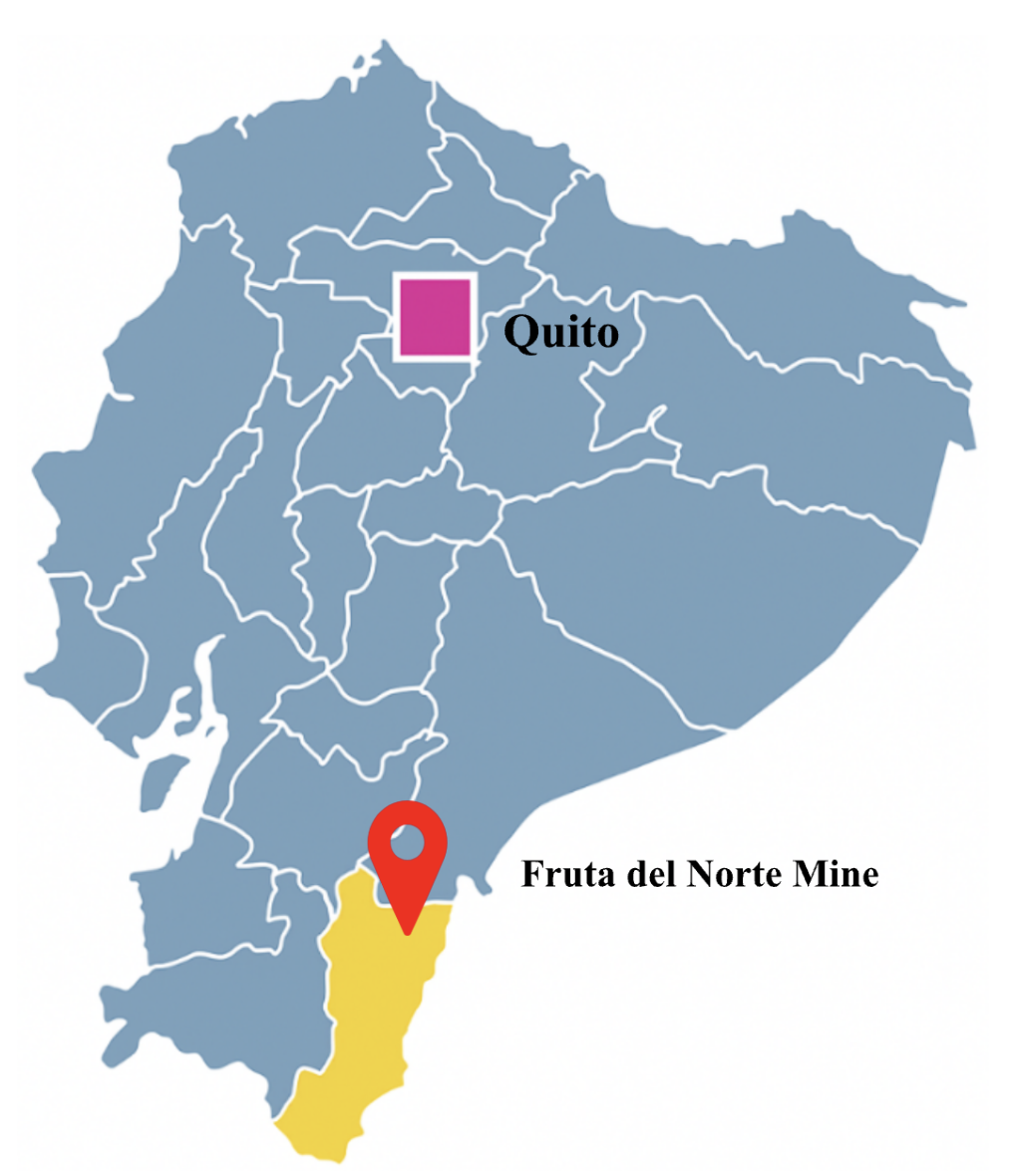
In one of South America's most remote and logistically demanding mining environments, conventional drilling had hit its ceiling. Helicopter-dependent operations, complex terrain, and geological targets requiring precise azimuth and dip angles that traditional methods simply could not reach, all pointed to the need for a fundamentally different approach.
Together with Lundin Gold's exploration team, Aziwell South America designed and executed a directional drilling campaign that accessed multiple targets per borehole, set a new curvature record for the LATAM region, and delivered measurable savings across every operational metric.
The project at a glance
- Location: Fruta del Norte (FDN) mine, Zamora Chinchipe, southern Ecuador
- Client: Lundin Gold Inc. / Aurelian Ecuador S.A.
- Target type: Structurally controlled epithermal gold-silver veins and stockworks
- The challenge: Complex, helicopter-supported logistics with geological targets beyond the reach of standard drilling geometry
- The solution: AziDrill® technology, enabling eight boreholes from only two pads while hitting up to four targets per pass
- Key results: Over 50% reduction in drilling meters and time, with an 85.7% decrease in pad requirements and significant cost efficiency
LATAM maximum curvature record — Set at Fruta del Norte:
One borehole established a new record for directional curvature in the LATAM region:
- Directional section length: 324.8 m
- Average DLS: 5.1°/30m
- Total change achieved: 51.5° in dip and 24° in azimuth
- Execution time: 9.5 days, with zero corrective maintenance requires
About the location
The Fruta del Norte (FDN) mine is located in southern Ecuador, in the province of Zamora Chinchipe, within the Cordillera del Cóndor. Since operations began in 2019, it has established itself as one of the country’s most emblematic large-scale mining projects. The project has been developed by different companies throughout its history: initially by Aurelian Resources Ltd. from 2001 to 2008; subsequently by Kinross Gold Corporation from 2008 to 2014; and, since 2014, by Lundin Gold Inc., through its subsidiary Aurelian Ecuador S.A.
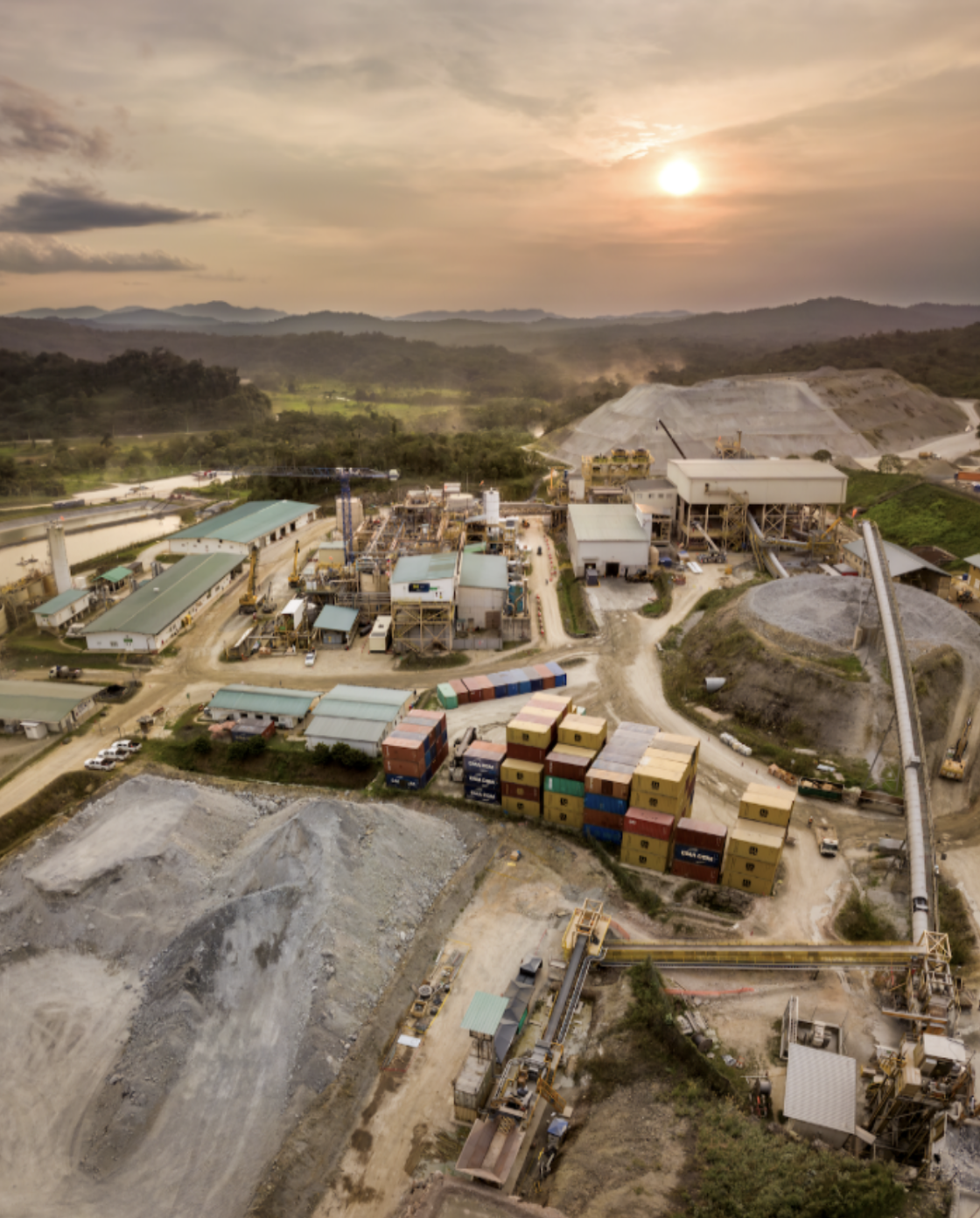
The challenge: Terrain, targets, and the limits of conventional drilling
Geographic and logistical constraints
FDN's location demands helicopter transport for equipment mobilization. Every additional drill pad multiplies the number of flights, the exposure to weather delays, and the non-productive time embedded in the program,costs that compound quickly in remote Andean terrain.
Resource efficiency and environmental responsibility
Lundin Gold's operational framework seeks to optimize resource use through:
- Minimizing surface footprint by decreasing the count of pads and infrastructure routes.
- Maximizing productivity through the optimization of total drilled meterage.
- Improving sustainability via the disciplined management of water and operational consumables.
Geometric limitations
Critically, the geological targets required interception at specific azimuth and dip angles that conventional drilling could not achieve. Without directional control, entire zones of interest would remain out of reach, regardless of how many holes were drilled.
Read more about what directional core drilling can really do.
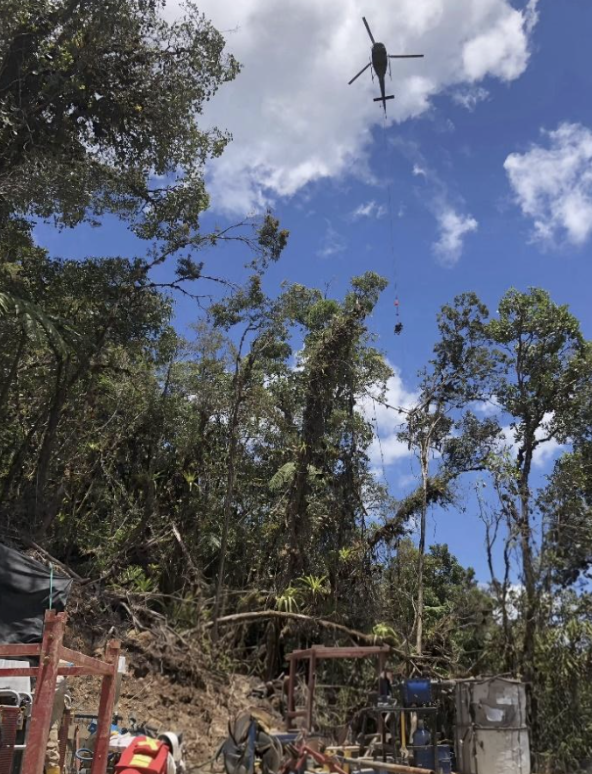
The solution: Long curves, multiple targets, one trajectory
To address these challenges, close collaboration was established with the Exploration team and Aziwell South America to design a directional plan using AziDrill® directional drilling equipment, capable of executing long curves able to traverse multiple targets within a single borehole trajectory.
The directional core drilling process enabled access to targets at horizontal angles that would be impossible to achieve with conventional methods. From 2 drill pads, 8 boreholes were executed with directional curves planned between 100–325 m in length, designed with DLS values between 5 and 6. These holes achieved inclination changes of up to 51.5° in dip and 33.4° in azimuth, with some boreholes intersecting up to 4 targets within a single trajectory.
Working in close collaboration with Lundin Gold's exploration team, Aziwell South America developed a directional plan purpose-built for the FDN deposit's geometry and logistical constraints.
Read also: Directional core drilling methods
What Lundin Gold said:
"Throughout our experience working with Aziwell as the directional drilling contractor, we highlight their commitment to quality and efficiency at every stage of the process. Their technical team demonstrated a high level of expertise and professionalism, enabling operations to be executed safely and in compliance with established standards. Furthermore, their ability to respond to unforeseen situations and maintain clear communication contributed significantly to meeting project objectives within the established timeframes."
Lundin Gold / Aurelian Ecuador S.A., Exploration Team