


Contents
For drilling controlled boreholes through rock formations, hard rock directional drilling is a massively useful technique. Directional core drilling tools can provide greater rate of penetration and less water consumption for various mining, mineral, and infrastructure projects. This article explores the method further, offering a historical background and future directions of hard rock directional drilling.
What is hard rock directional drilling?
Hard rock directional drilling is a type of drilling that is highly specialized to drilled controlled, curved boreholes through hard, compacted geological formations, such as granite, basalt, and quartzite.
What makes hard rock directional drilling unique?
Hard rock directional drilling can be differentiated from conventional hard rock drilling specifically through the use of tools which guide the drill bit along a steered borehole.
Hard rock drilling itself can be further differentiated from hydrocarbon drilling, which has become the most known type of drilling by the general public. The former requires powerful cutting tools (commonly diamond drill bits), and is usually performed with much smaller rigs than the latter.
Hard rock directional drilling is becoming more and more popular in energy infrastructure, mining, tunneling and utility installations, at a time when increasing costs make it a lot more valuable to have accuracy while drilling, and viable to save funds on extensive drilling projects.
Get an overview: What is directional drilling?
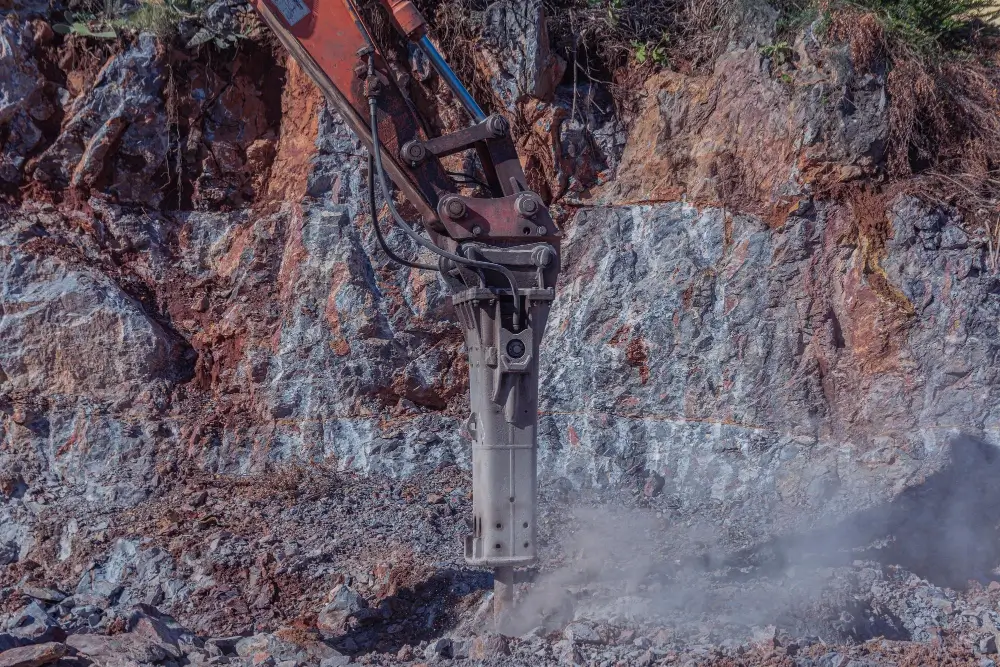
An historical background to hard rock directional drilling
Ancient times
Early rock penetration methods relied on fire-setting, chisels, and manual hammering. They were effective for breaking rock, and one could reasonably claim they were a more «manual» way of drilling or tunneling along a controlled path.
Did you know? The evolution of hard rock directional drilling is closely tied to the evolution of borehole drilling itself. You can read more about borehole drilling and its history in our article here.
Industrial innovations
The Industrial Revolution introduced steam-powered percussion drills, then rotary systems became common, and humans abandoned the idea of controlling the trajectory of boreholes in favor of simply drilling longer and faster.
Although directionally drilled boreholes did become more used for certain applications, primarily through the use of casing wedges, it wasn’t until the late 20th century that directional drilling in general made significant leaps forward.
Modern times
The introduction of downhole mud motors allowed the drill bit to turn independently of the drill string, and Measurement-While-Drilling (MWD) systems enabled the operators to read inclination and azimuth in real time.
But although these improvements made directional drilling a staple in hydrocarbon exploration, where the geological formations drilled were primarily softer sedimentary rocks, it wasn’t until improved rock-cutting technologies (like tungsten-carbide and polycrystalline diamond compact bits) made hard rock drilling easier, that downhole motors made the jump to hard rock drilling.
Recent years and up till today
From the early 2000s onward, major breakthroughs in electronics, sensor technology, and computing power allowed for rotary steerable systems (RSS) and high-frequency vibration tools adapted to hard rock. These innovations made it possible to maintain trajectory and increase penetration rates through hard rock formations.
Today, long-distance directional drilling through some of the world’s toughest geological formations is being routinely carried out.
Common hard rock directional drilling technologies
Drill bits and cutting systems
Hard rock requires exceptionally durable and efficient cutting mechanisms, like PDC bits, which are engineered with thermal stability and reinforced cutters to withstand high temperatures and abrasiveness.
Downhole motors
High-torque, high-horsepower mud motors allow independent bit rotation, but at the expense of extra pumped water or drilling mud.
Rotary Steerable Systems (RSS)
Modern RSS tools allow the drill string to rotate continuously while steering, reducing vibration, improving hole quality, and enabling precise borehole control.
Directional core drilling tools, such as the Azidrill, are among these rotary steerable systems specifically designed for directional drilling in hard rock, which provide greater rate of penetration and less water consumption than mud motors,
Drilling fluids for hard rock
Fluids designed for hard rock drilling need to optimize cooling, lubrication, and cuttings suspension. Fractured zones are more common in hard rock, meaning fluids sometimes need to also be adjusted for hole stabilization in such zones.
In some projects where fluid circulation becomes impractical due to too many fractured or cavernous zones which lead to loss circulation, can also be used.
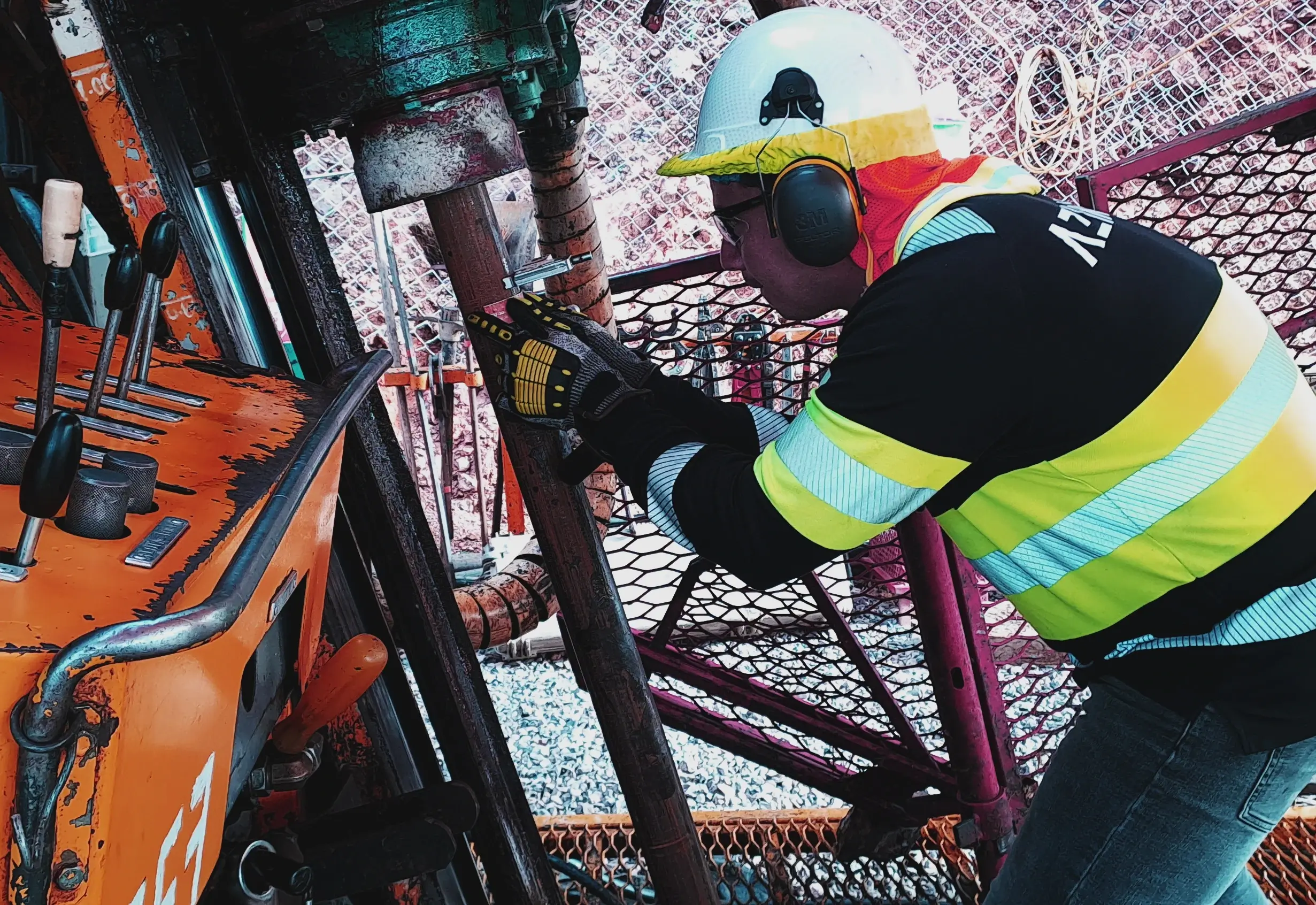
Where is hard rock directional drilling useful?
Infrastructure and utility installation
Drilling is not only done for hydrocarbon and mineral exploration, but for infrastructure and geotechnical purposes as well. Directional drilling in hard rock enables pipelines, cables, and water conduits to be installed in mountainous terrain, under rivers, highway and railways, and under urban areas.
Mining and resource development
Since most mineral accumulations are associated with mountains, it’s common to have to drill through hard rock to get to ore bodies, to perform geotechnical investigations, or build mining infrastructure.
Hard rock directional drilling can be used to create dewatering or ventilation galleries, conduct exploration drilling, install geotechnical instrumentation, or precisely access ore bodies.
Hydropower and tunneling
Projects like pressure tunnels, penstocks or bypass conduits require very precise alignment. As such, directional drilling is crucial to accurately drill boreholes through compact rock masses.
Environmental and land-use constraints
Drilling directionally makes it possible to reach multiple targets from the same platform, which leads to reduced environmental impact. This makes it highly important in areas with protected landscapes and sensitive ecosystems, but also where limited land access poses an issue.
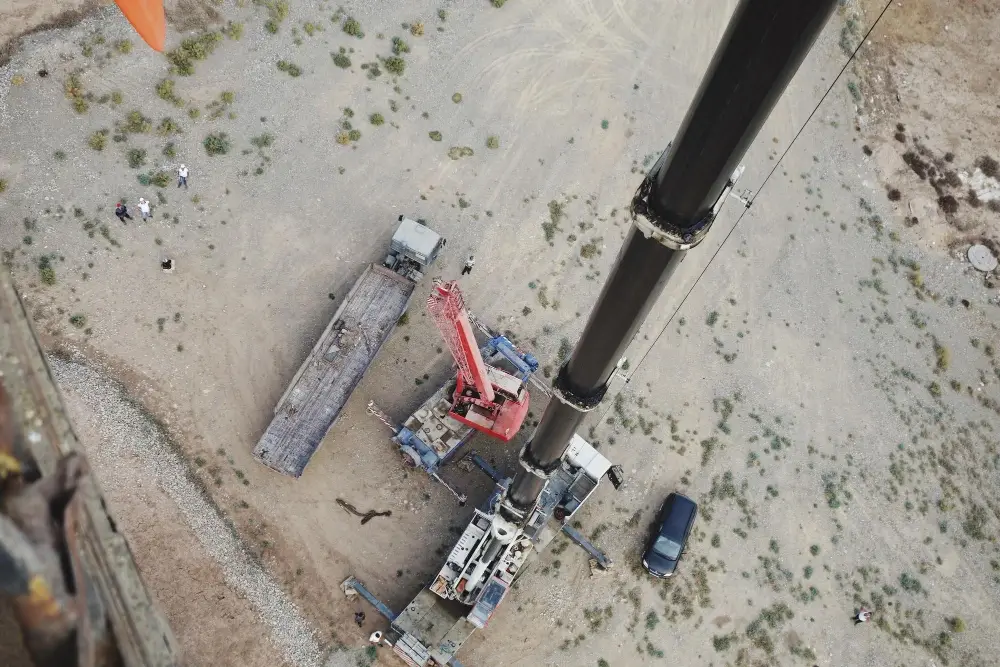
The future of hard rock directional drilling
With the increase in demand for critical minerals, we are bound to see an increase in demand for drilling into hard rock, and with it, the use of directional drilling in such conditions.
Furthermore, building up energy infrastructure around the world will also require hard rock drilling, especially when we talk about dams or similar projects in mountainous areas.
This will most likely lead to further developments and increased specialization of the tools used for hard rock directional drilling, as the boreholes will become longer and through more challenging rock, and the project will become more complex.
Innovations that will be critical going forward
Automation and AI-driven drilling systems
One can expect to see optimization software that will adjust drilling parameters automatically to increase penetration rates and reduce tool wear.
Next-generation cutting technologies
Developments in cutting technology could lead to widespread use of laser-assisted drilling, or thermally-enhanced cutters which could make drilling faster and easier in crystalline rock.
Improved subsurface imaging
Integration of geophysics, like seismic-while-drilling, and machine learning for the purpose of lithological predictions could allow drillers to anticipate formation changes and challenging rock conditions before reaching them.
Electrification of drilling equipment
Electric top drives, battery-assisted downhole tools, and reduced-emission support systems will lower environmental impact and ventilation requirements for underground operations.
Advanced directional drilling technology in mining
Aziwell is a leading provider of directional drilling solutions and offers service and software products for directional drilling. At the heart of this is our advanced technology, which reduces the environmental footprint through fewer drill pads, operational time, and CO₂ emissions. Our directional drill is precise, does not require special rods or rigs, and has no depth limitations.

