


Contents
Directional drilling is a drilling technique that is used to drill well along non-vertical paths. It has been practised since the 1920s, but in recent years, there has been much technological progress in the field. These modern advancements have made it possible to drill precisely in a large variety of different projects. We’ll break down the history of directional drilling for you here.
A history in four chapters
The history of directional drilling can be summarized in four chapters:
- Wishing for precision in drilling: The need (and want) to drill a borehole more precisely in a controlled direction.
- Discovering precise drilling techniques: The development of the whipstock, and the later invention of mud motors.
- Abandoning the desire for precision: Challenges when using new technology in mining arose due to larger costs and higher water consumption.
- Returning to precision and developing new drilling tools
Wishing for precision
The term itself is anything but ambiguous; it doesn't leave much to be interpreted, and it unequivocally excludes any form of guesswork. But how can one be even remotely precise when trying to steer a drilling bit hundreds of meters below the surface of a mountain, while trying to hit a target the size of a small car?
Sure, you can always find out where your tool is by surveying the borehole, but how are you going to make sure it will then drill in the desired direction?
Undoubtedly, the first person who ever drilled a borehole and found out that it tends to drift away at some point, was also the first person to think about controlling the direction of said borehole.
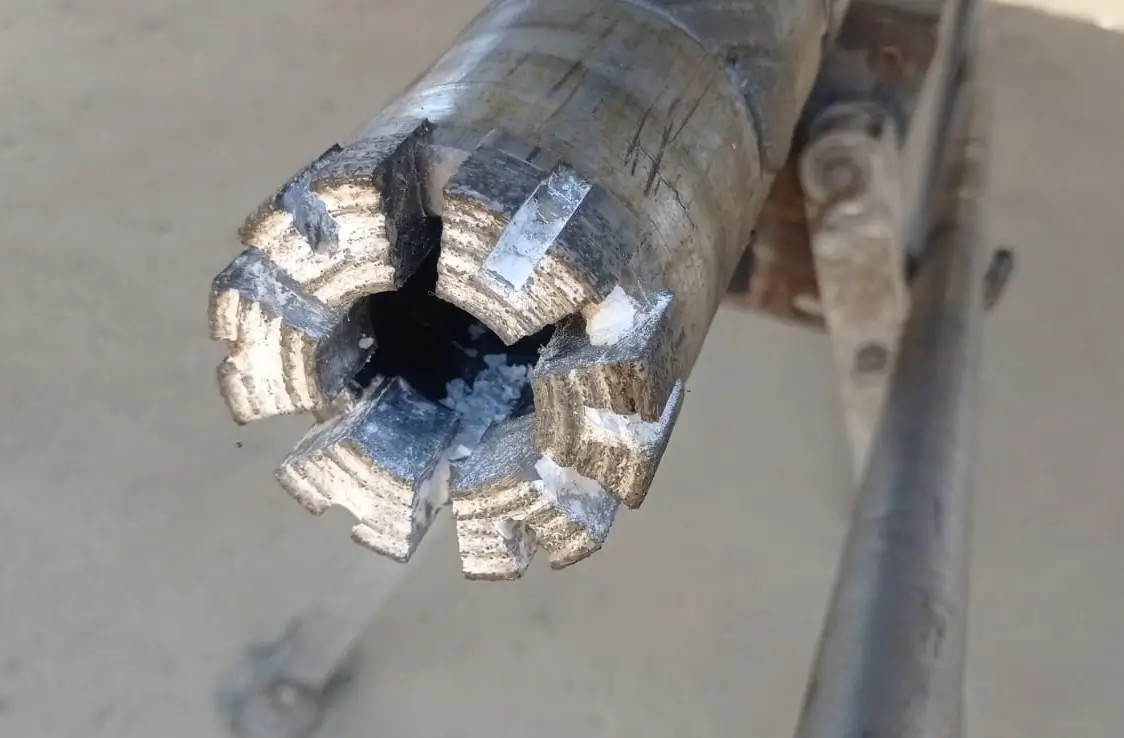
Precision is a burning wish many a geologist has when an exploration drilling program is planned, but it took mankind decades of perfecting drilling tools to get any semblance of it.
Discovering precision
Although the quest for precision began in the oilfields, they had no need for accurate targeting back in the day. Hitting a general target area was enough for both exploration and production drilling before the first deviation methods were introduced.
However, as boreholes started to be drilled deeper and deeper, and drilling accidents became more common, it became more important to intercept certain geological structures (such as anticlines) at specific angles or from specific directions.
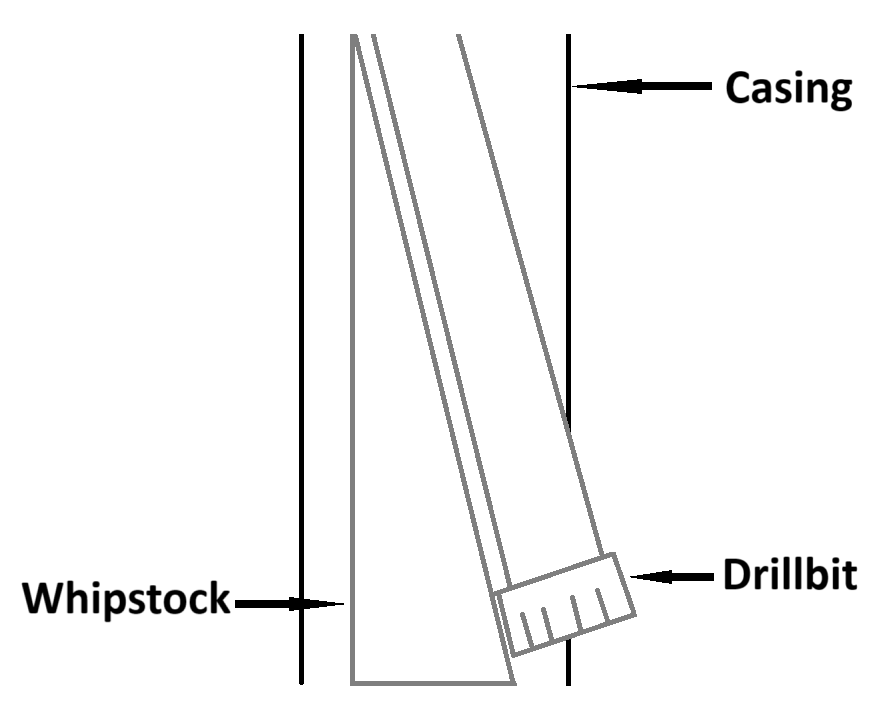
This led to the development of the whipstock in the early 20th century. In simple terms, a whipstock is a wedge that intentionally forces the bit out of the original hole, enabling controlled sidetracks (in oil and gas) or kick-offs (in mining).
The initial use of whipstocks
The whipstocks saw limited use at first, but they received wide coverage after the massive drilling accident at Conroe, Texas, in 1933. There, an out-of-control blow-out resulted in the catastrophic collapse of the surface layer, and a large fire erupted. As the crater grew, it swallowed two nearby oil rigs.
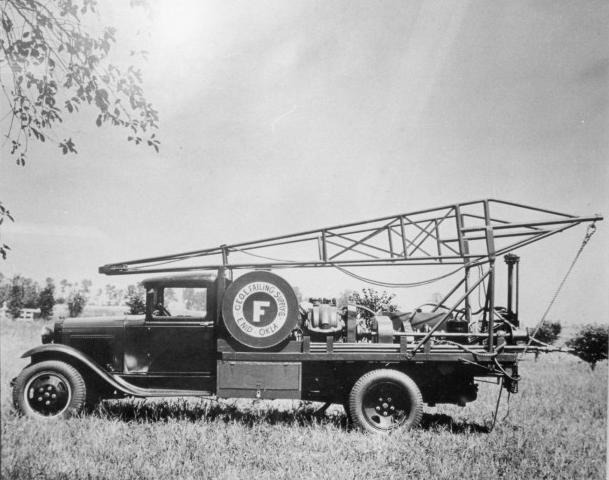
In order to bring the eruption under control, it was decided to drill multiple relief wells that would reduce the pressure which was causing the hydrocarbon to gush out through the crater. Another innovation, the portable drilling rig recently developed by George Everett Failing, was employed, because it could drill a borehole quickly, then move to another location for another relief well.
However, it was soon discovered that in order to maximize the effect of the wells, they needed to deflect the borehole at a depth of around 150m, making the whipstock an integral tool. The resulting success was resounding, and made the whipstock a highly popular downhole tool almost overnight.
Improved technology and invention of mud motors
Over the next few decades, the technology was further improved, especially as offshore drilling began to take off. Through directional drilling, multiple wells could be drilled from the same oil platform, without having to move it to another location, saving a significant amount of time and money.
Then in the 1960’s, mud motors were invented. The undisputed leader in terms of usage in directional drilling to this day, mud motors could bend the drill bottom hole assembly itself and deflect the hole trajectory. Combining this technology with further development in surveying tools, unleashed the full potential of directional drilling. By using gyroscope and magnetic surveying instruments, one could know exactly the position of the drillbit and the trajectory of the borehole, then adjust the motor to drill exactly on target.
Read also: What is borehole surveying?
Abandoning precision
The innovations of the 20th century quickly found use outside of the oilfield as other industries recognized the potential they carried.
A growing number of geotechnical drilling programs began using directional drilling for infrastructure projects, such as drilling under riverbeds, or drilling targeted holes along the paths of planned tunnels.
Another sector that began employing steering tools was the mining one. First through wedges, then through mud motors. The reduced number of drilled meters needed to intercept an ore body with multiple holes was certainly an interesting prospect for mining geologists.
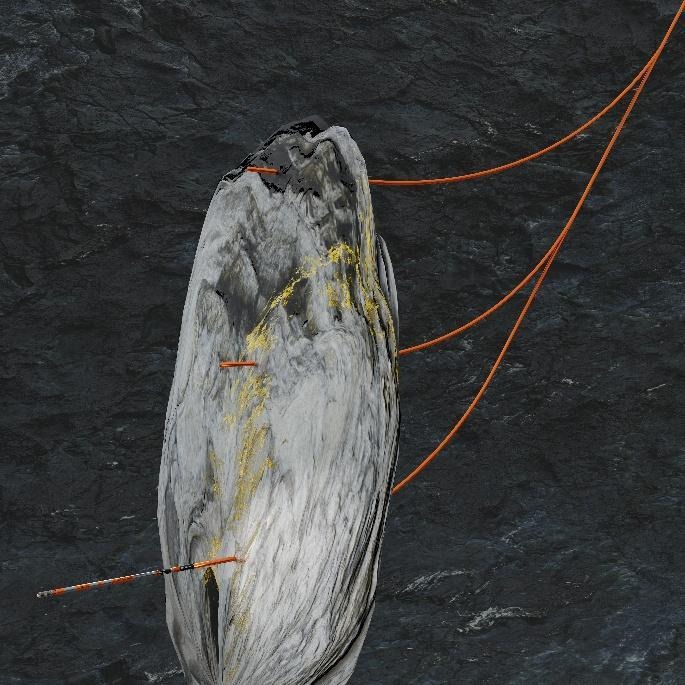
However, there was one particular problem that the drillers and geologists in mining discovered when using precision directional drilling tools such as the mud motors: the rate of production would decrease greatly, as diamond drilling was done largely with core drilling tools, and mud motors were full faced. While in the oil industry the addition of a turbine engine to the bottom hole assembly would translate into a faster rate of penetration of the rock layers, in mining the full face drill would have more contact with the rock than a coring bit, leading to reduced drilling speeds.
As such, the quest for precision was costing more and using more water, so where precision wasn’t of utmost importance, directional drilling was eschewed in favor of conventional core drilling methods.
Return to precision
There had to be a way to perform directional drilling with core recovery to increase the value proposition for mining companies. And indeed, this is where a particular important innovation came to the mining sector first, instead of it being developed in and for the oilfields.
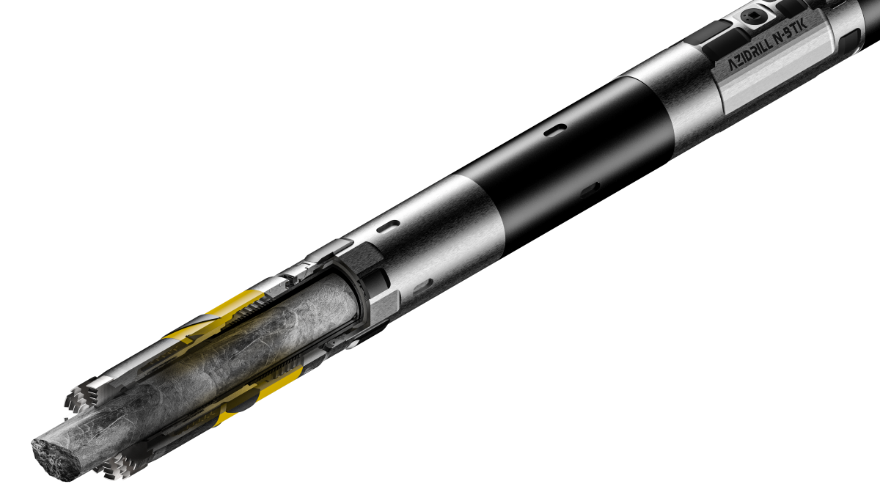
Aziwell’s founder, Eirik Borg, played a monumental role in the birth of the first wireline directional core drilling tool. And over the years, Eirik invented newer systems that performed the task even better and faster than before, and with larger and larger core size.
As of the time of writing, the largest directional core drilling tool in the World is Aziwell’s H-size Azidrill that can retrieve a core of 50.7mm in diameter and hit targets as wide as mere meters at great depths below the surface of the Earth.
The quest for precision has certainly been a long and arduous one, but with the recent innovations and the boom in technology, the future looks to be rather exciting and precise.
Continue reading about directional drilling
- The directional drilling process
- The equipment used in directional drilling
- The directional drilling methods
We offer advanced directional core drilling technology
Aziwell is a leading provider of directional drilling solutions and offers service and software products for directional drilling. At the heart of this is our advanced technology, which reduces the environmental footprint through fewer drill pads, operational time, and CO₂ emissions. Our directional drill is precise, does not require special rods or rigs, and has no depth limitations.

