


Contents
Before one can start extracting minerals from a mine, or oil from a reservoir, or begin a building project, it’s necessary to evaluate the location. This includes surveying the area geologically and understanding the subsurface rock formations. For this, we drill wildcat wells and pilot holes, to gather all the data we need in order to make informed decisions regarding the future of the project.
Analyzing rock through drilling
Drilling is one of the most direct ways of analyzing rocks and geological formations when we need to know exactly what we are dealing with. It can be done for exploration purposes, such as finding new oil and gas reservoirs, or locating ore bodies for mining.
It is also a good way of getting from point A to point B through a mass of rocks that is in the way. This is most common in geotechnical drilling, where it’s important to also analyze the rocks that are being drilled through, but also in infrastructure projects where we might want to drill a drainage hole or drill a small tunnel through which one can later pull cables.
In both cases, the principles of borehole drilling are quite the same: a drilling rig will drill a hole and remove material from the ground until the designated target is reached.
But regardless of the purpose of the project, one needs some information before even thinking about drilling in a location. That’s why we have a process for inspecting the area before we even start to think about drilling pilot holes.
Initial prospecting of the area
The information needed to evaluate whether to drill in an area or not is usually given by geologists. After the location has been geologically surveyed (and in many cases geophysically as well), we will have a basic idea of what we expect to find in the ground and the geological formations that we will encounter.
These could be the very geological formations that contain the precious ore that we are looking for or that elusive oil reservoir. Or they could be the pesky fractured rocks and quick clays which will make the construction of our infrastructure project quite difficult.
Whatever it is that we’re expecting to find underground, it needs to be confirmed, and that can only be done once a geologist is physically holding a chunk of the rock removed through the process of drilling. The physical inspection of the rocks is made possible through drilling pilot holes and wildcatting.
Physical inspection of the rocks
In the mining industry, borehole surveying plays a critical role in determining the exact position and orientation of drillholes. By accurately mapping the borehole’s path, it can be ensured that samples taken from different depths and directions are properly located in three-dimensional space. This allows for reliable correlation of core samples with geological models, which is vital for assessing the size, shape, and grade of an orebody.
.webp)
What is a borehole?
A borehole is a narrow shaft bored into the ground, either vertically, horizontally, or at an angle (directional). It allows engineers to extract core samples, measure temperature and pressure, and install sensors to map the subsurface long before full-scale excavation begins.
There are different types of bore holes. The two most commonly used in exploration drilling are wildcat wells and pilot holes.
Wildcat wells
No, we are not going to talk here about the disruptions brought by borehole drilling to the local wild cat population. Instead, we will talk about the type of borehole which is commonly called a wildcat well. These will be encountered primarily in exploration drilling, and this term is most commonly used in the oil and gas industry.
What are wildcat wells?
Wildcat wells are the very first boreholes to be drilled in a new formation, far from existing boreholes, and attempting to reach resources that are yet unproven.
They will, of course, be riskier than the boreholes drilled in known formations. Although we have an idea of what to expect, we don’t know for sure the pressures and temperatures that we’ll encounter, or the condition of the formation.
Risks associated with wildcatting
Traditionally in oil and gas drilling, wildcat wells tended to be the ones with a higher likelihood of issues, including kicks and explosive blowouts. This led to people and companies specializing in drilling these high-risk boreholes, and the term wildcatter became used for those who do this for a living.
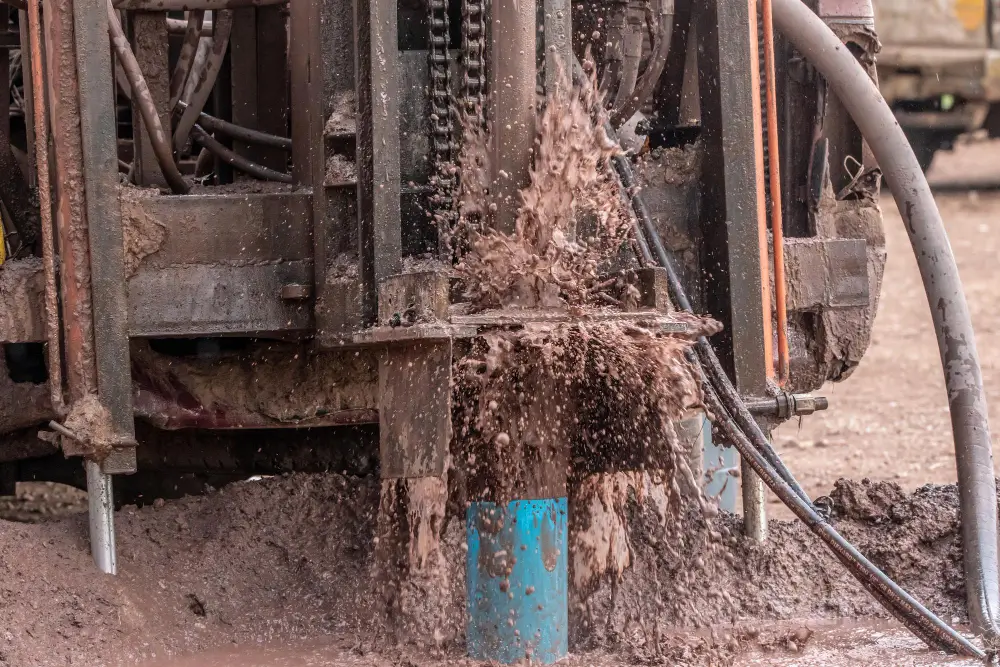
Pilot holes
Similar to wildcats, but common to infrastructure projects and geotechnical drilling (although they have their use in oil and gas and mining exploration as well) we have pilot holes. And just as the wildcats have nothing to do with the actual wild cats, pilot holes are also not going around flying airplanes. Instead, they are called so because they will help guide the later main holes which are normally larger.
What is a pilot hole?
A pilot hole is a small-diameter initial borehole drilled to "scout" the intended path of a much larger opening. It provides a sample of the rock types and it acts as a guide path. Once a pilot hole successfully reaches its target, it is "reamed" or enlarged to the final required diameter, ensuring the larger hole stays perfectly on-center.
How to drill a pilot hole?
A pilot hole’s purpose is to confirm the initial expectations regarding the geological formations encountered, but are also designed to follow the path of the main holes, which could later become the tunnels, the drainage holes, or the underground cable pipes that we use in our civil infrastructure.
Think of a tunnel that must go through an entire mountain. Geologists will know what that mountain is made of. They will have a clear idea of the types of rocks, the faults, the fractures, and if it is feasible to dig a tunnel there.
The importance of drilling pilot holes
It is bad practice, at least in modern times, to start drilling a whole tunnel without drilling a pilot hole (or multiple) first to confirm the state of the formations and if they will be solid enough to not collapse.
For other kinds of projects, for example a drainage hole that will anyway be reinforced with pipes afterwards, one might not even need to confirm much of the underground geology. But drilling a large diameter borehole is tricky and it might be even impossible to keep it on the desired path if it needs to be longer than 100 or so meters. For this reason, we can drill a pilot hole in a smaller diameter to make sure we hit the intended target, then enlarge it to the desired diameter.
Understand pilot holes: Explore our infrastructure project in Norway
In our recent infrastructure project in Norway, the challenge was navigating high-density urban geography with complex crystalline bedrock. By drilling a directional pilot hole first, we were able to confirm the absence of major fault zones that could lead to water ingress. This pilot-first approach allowed the subsequent larger-diameter drainage and cable tunnels to be completed with zero structural deviations, proving that Aziwell’s directional technology is as vital for city infrastructure as it is for deep-earth mining.
How can we get the absolute most of wildcats and pilot holes?
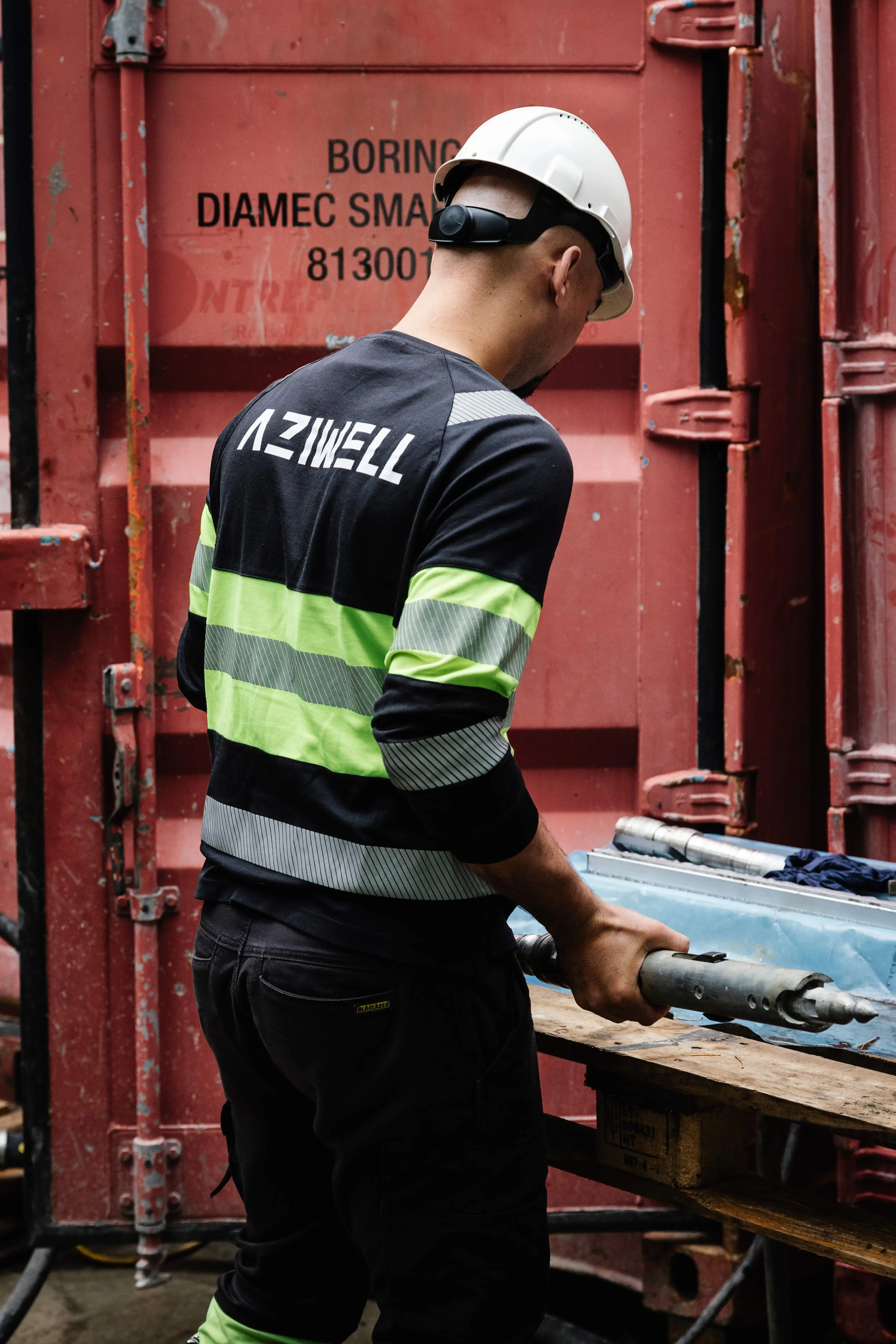
With directional drilling, of course!
There are plenty of ways to perform directional drilling operations, and the author of this piece has personally sacrificed his fingertips to write more about those and their history.
Especially in the oil and gas industry, directional drilling technology was developed to meet its specific needs and to make all oil wells, including wildcats, as accurate as possible.
But in mineral exploration (where much of the drilling is in hard rock) and in infrastructure projects, using directional core drilling in particular tends to be the best when it comes to increasing accuracy, minimizing the total drilled meters, and reducing the environmental impact of the project at the same time.
Continue exploring our directional drilling content universe
To sum up
Wildcat wells and pilot holes are essential exploratory tools that transform geological uncertainty into actionable data. While wildcatting explores unproven territories in oil and gas, pilot holes provide the precision required for complex mining and infrastructure projects. By integrating Aziwell’s Azidrill technology, these initial boreholes do more than just scout – they allow for continuous core recovery and precise steering, reducing total drilled meters by up to 40%, and significantly lowering the environmental footprint of the project.
We offer advanced directional core drilling technology
Aziwell is a leading provider of directional drilling solutions and offers service and software products for directional drilling. At the heart of this is our advanced technology, which reduces the environmental footprint through optimized drill-path planning. It allows for multiple targets to be reached from a single drill pad, significantly reducing land disturbance and CO₂ emissions.
Read more
- How we saved $1.3M CAD at the Kitsault Valley Project using directional core drilling
- Deep dive into what directional drilling is
- Why "point-the-bit" technology is the new benchmark for hard rock drilling
Frequently asked questions
Why is a pilot hole necessary in directional drilling?
A pilot hole establishes the precise trajectory for a larger opening. In projects like our infrastructure project in Norway, the pilot hole ensures the path avoids critical infrastructure (like railways or cables) before the hole is reamed to its final diameter.
Can you recover core samples from a pilot hole while steering?
Traditionally, steering tools like mud motors could not recover the core in curved sections. However, Aziwell’s Azidrill uses "point-the-bit" technology to provide continuous core samples (N-size or H-size) even while navigating complex curves.
How does a pilot hole reduce project costs?
By confirming geological conditions and ensuring "first-time" accuracy, pilot holes prevent expensive "drift" corrections and reduce the total number of meters drilled.

